Before you accept: what’s the culture beyond the brand name?
It’s easy to have your head turned by a brand you love, especially when you wear the clothes, admire the collections and follow the campaigns. By the time a job comes up, you may already be sold on it. I get it, I work in fashion too!
While you’ll know a fair amount about its consumer brand, its employer brand is an entirely different matter. What’s it like to work there, who will you report to, and how does the team get through a difficult week?
No matter how much you like the name above the door, it's important to find out if it's the right employer for you.
What does a good culture mean to you?
“Good culture” is a pretty broad description, so it helps to think about what would make this a good place for you to work.
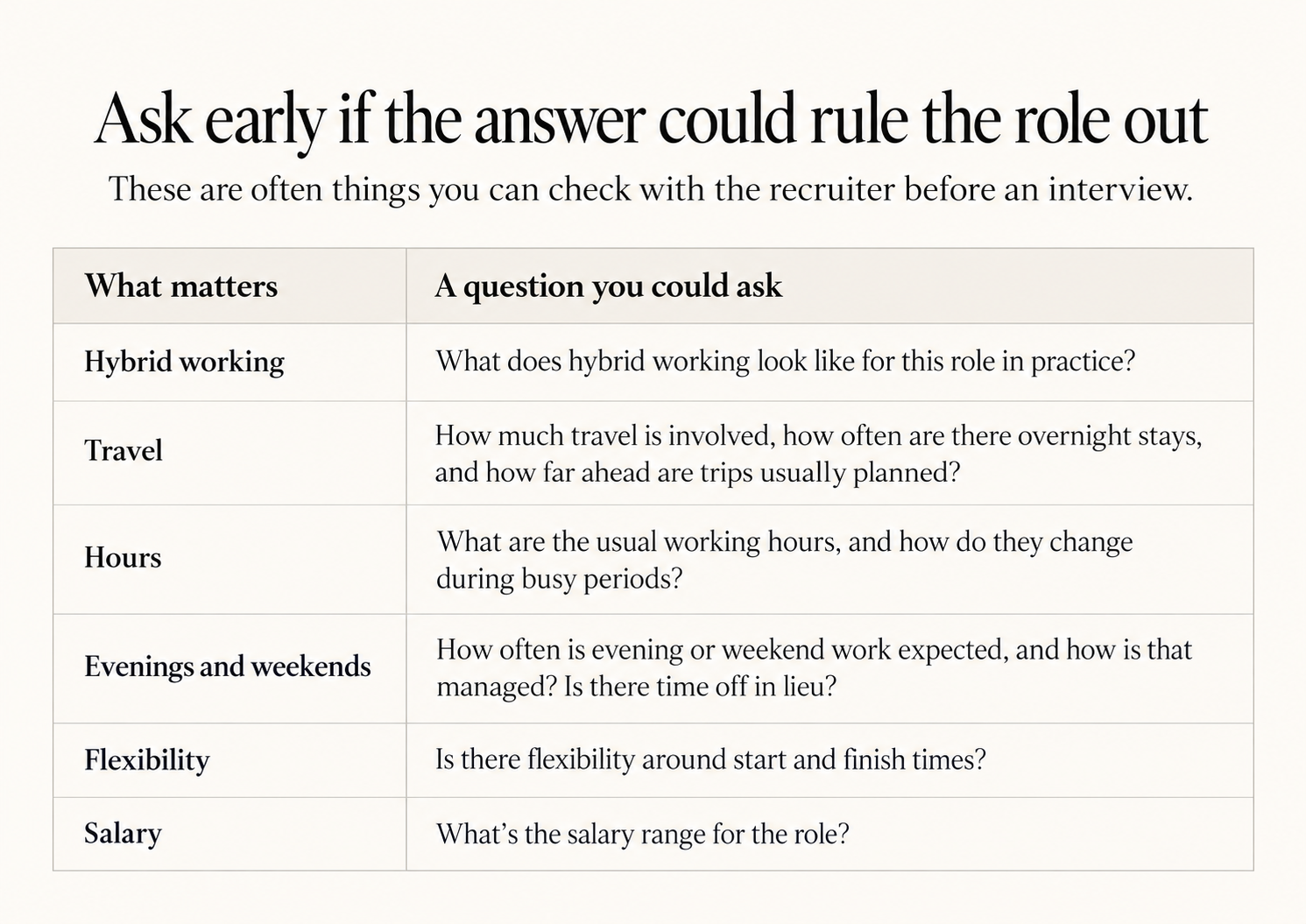
Travel is a useful example, frequent trips might be exactly what you want or a total nightmare to fit around responsibilities at home. Equally, if your role involves customers or suppliers, too little travel could leave you struggling to build the relationships you need.
You might require a hybrid working arrangement, or some flexibility around start and finish times. Perhaps you’re happy with occasional late nights around a launch, but don’t want staying late to be the everyday expectation. If weekend work is part of the job, it’s useful to know how often it happens, how much notice you get and whether there’s time off in lieu. If some of these are deal breakers for you then please gain clarity before you even go to an interview to save everyone's time, especially your own.
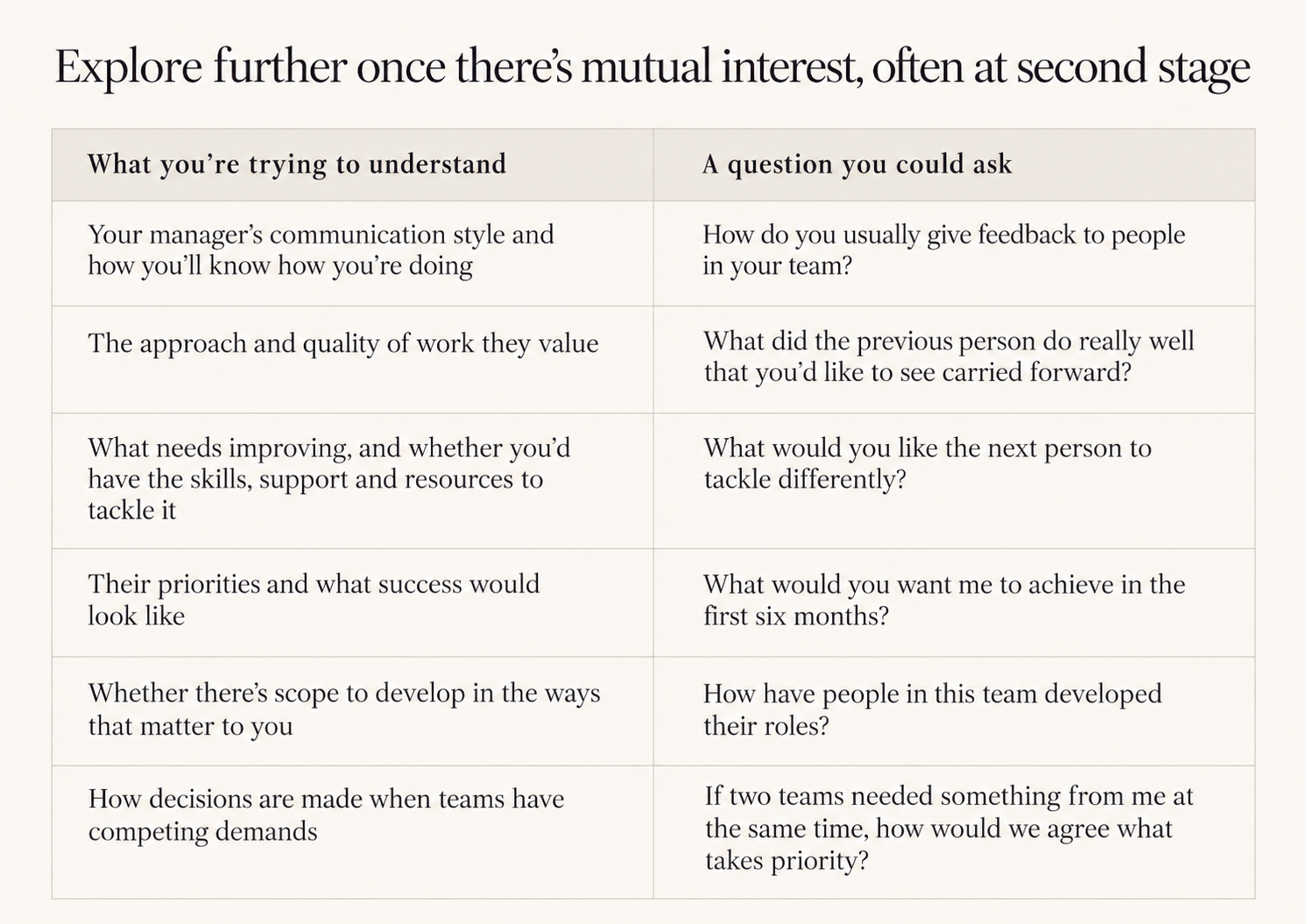
It’s also worth thinking about how you like to work. Do you want regular guidance from your manager, or more freedom to make decisions? Would you be comfortable working closely with a founder who’s involved in most decision making? If you’re taking responsibility for a team or a commercial target, what support, resources or budget would you need to deliver what is expected? Is it there or are you being hailed as the next great miracle worker?
You may also want to understand how inclusive the business feels in practice. That could mean asking about the make-up of the team, how different voices are heard, or whether the policies they talk about externally are reflected in the way people actually work.
While you won’t necessarily get everything on your wish list, it helps to know which things you could work around and which would make the role a no-go.
Look beyond the website
LinkedIn can help you see how long people have been in a business, how their roles have developed and whether several people have recently moved on. When I'm going to see a new client I always do a search on people who previously worked at the business as well as who's there. That helps me spot trends where there may be issues. It’s worth keeping some perspective, though, as profiles aren’t always updated and a regularly advertised role could mean growth rather than repeated departures.
Employee reviews on the likes of Glassdoor can also be useful, particularly when the same issues appear across several recent accounts, although you should check the dates and departments before drawing conclusions. Someone’s experience in a different team during a time of major brand transformation may tell you very little about the manager you’d work with now.
If you already have a trusted connection who knows the business, ask what they enjoyed and what they found difficult, while remembering that their experience will be one person’s view from a particular point in time.
Anything you find that concerns you is something to explore, and you may discover there’s a perfectly reasonable explanation.
Pay attention during the process
The interview process gives you some first-hand experience of dealing with the business, so pay attention to how people prepare for your meeting, do they arrive having read your CV with a set of structured questions or are they totally winging it? Are the interview stages explained and how well are you kept informed if plans change?
It’s also useful to hear whether the people you meet are clear about what they need you to achieve, particularly if you’re speaking to several people who’ll be involved in your work. Are they all stating the same priorities?
One delayed reply or rearranged interview wouldn’t worry me much, although repeated confusion, dismissive behaviour or important details that nobody can clarify would deserve a much closer look.
There are positive signs to notice, too. Someone being open about a challenge, explaining where the team needs support or acknowledging that something needs improving can make for a useful conversation. There’s an opportunity here to relay how you’ve handled that kind of challenge in the past.
A task can be a useful part of the interview
There’s understandable frustration about interview tasks, particularly when candidates are asked to spend hours producing work with little explanation. However, a relevant, well-designed task has a place, and research on hiring methods supports skills assessment tests as useful predictors of job performance.
They give you a chance to demonstrate how you approach the work, while giving the employer something to assess alongside your interview answers.
For a merchandising role, that might mean talking through a small set of trading figures, while for a communications role it could be explaining how you’d approach a hypothetical brief. Whatever the exercise, it should have a clear purpose and a reasonable limit on the time involved.
You can ask what they’re assessing, how long they expect it to take and how your work will be used. If the brief seems to require several days’ work, or a finished solution to a live business problem, it’s reasonable to discuss the scope before committing.
Ask questions that fit the conversation
You want to understand the job without making every meeting feel like an interrogation, so choose two or three questions that matter at that stage and listen to what’s already been covered.
If the interviewer mentions something you’d like to understand better, you can follow it up naturally:
“You mentioned opportunities to develop. How have people in this team grown their roles?”
If you’re discussing a replacement role, you could ask:
“What did the previous person do really well that you’d like to see carried forward?”
“What would you like the next person to tackle differently?”
Those questions can help you understand the expectations without asking for personal information about someone who’s leaving.
Give people time to think, as they may not have an example immediately to hand. If something important remains unclear, you can come back to it with the person best placed to answer.
If meeting a future colleague is part of the process, take the opportunity to ask about their work rather than just answering questions. Your recruiter can also help clarify practical details and share what they know about the team.
Before you say yes
Go back to what mattered to you at the start and consider whether you’ve learnt enough to make the decision. Are there any gaps that could affect whether you can do the job, or whether it works for your life?
You can be keen on the opportunity and still need a few things clarified, and I’d rather you had those conversations now than found yourself three months in wondering why you didn’t ask.
Your interview question checklist
Use this to prepare, but choose questions relevant to you rather than working through the entire list. If something’s already been answered, there’s no need to ask it again. The checklist should help you have a useful conversation, without becoming another interview for the interviewer.